Transmission 009 // “Still”

Amelia didn’t move. Not a breath, not a blink. Her eyes fixed on the photo, the weight of it slamming into her chest.
Her parents looked back at her. Faces she hadn’t seen in more than a decade. Not since the night the police dragged her out of their bedroom closet. After that, everything disappeared behind yellow tape. The house. Her things. Her whole identity. A childhood sealed away in boxes and evidence bags, lost to her forever.
And now, here they were again. Frozen in a moment she couldn’t place. Standing beside a man she didn’t know. Ghosts resurrected in pixels.
Her hand lifted toward the screen, fingers trembling, as if she might reach through and touch them. Her vision blurred.
Then she refocused—on him. The figure in the center was the most haunting of all.
Richard Helpmann stood between her parents, straight-backed and perfectly composed. His smile was thin, but it found the creases at his eyes. Amelia guessed he was in his mid-forties, maybe ten years older than her parents, but he wore it lightly. He looked lean, composed, and completely at ease. Steel-grey hair, parted with surgical precision. A black tuxedo, tailored sharp at the cuffs and collar. He wore it like armor. Not just a suit. A statement.
Her father held a glass in one hand, the other arm resting easily on Helpmann’s shoulder. He was caught mid-laugh, eyes bright and alive, just as Amelia remembered. On the other side of the photograph, her mother wasn’t quite as close, but it was enough to make Amelia’s stomach knot up. She knew that Evelyn Lockwood had always been happy to leave the hellos and handshakes to her husband, much preferring space and silence over small talk. And yet, here she was. Standing near enough to this man to mean something. This wasn’t a chance encounter. They knew him. More than that— it seemed as though they were friends.
Marv’s voice cut through the fog.
“You okay, Ames?”
She blinked.
“Yeah. I just…”
The crack in her voice gave her away.
“I didn’t expect to see them again. Not like this.”
Marv pulled a hand back through his hair.
“So, who the hell is this guy? And how did he know your folks? They look kinda… cosy.”
Amelia didn’t answer. Her fingers pressed against the seam of her jeans.
“I don’t know,” she said at last. “But I need to find out.”
Her voice was steady now. Her hands weren’t.
“I need to know who he is, Marv. My mom left his name for a reason. She wanted me to find him, and this photo proves they were connected. If he was in their lives back then, he might know what really happened.”
Marv nodded.
“Okay. On it.”
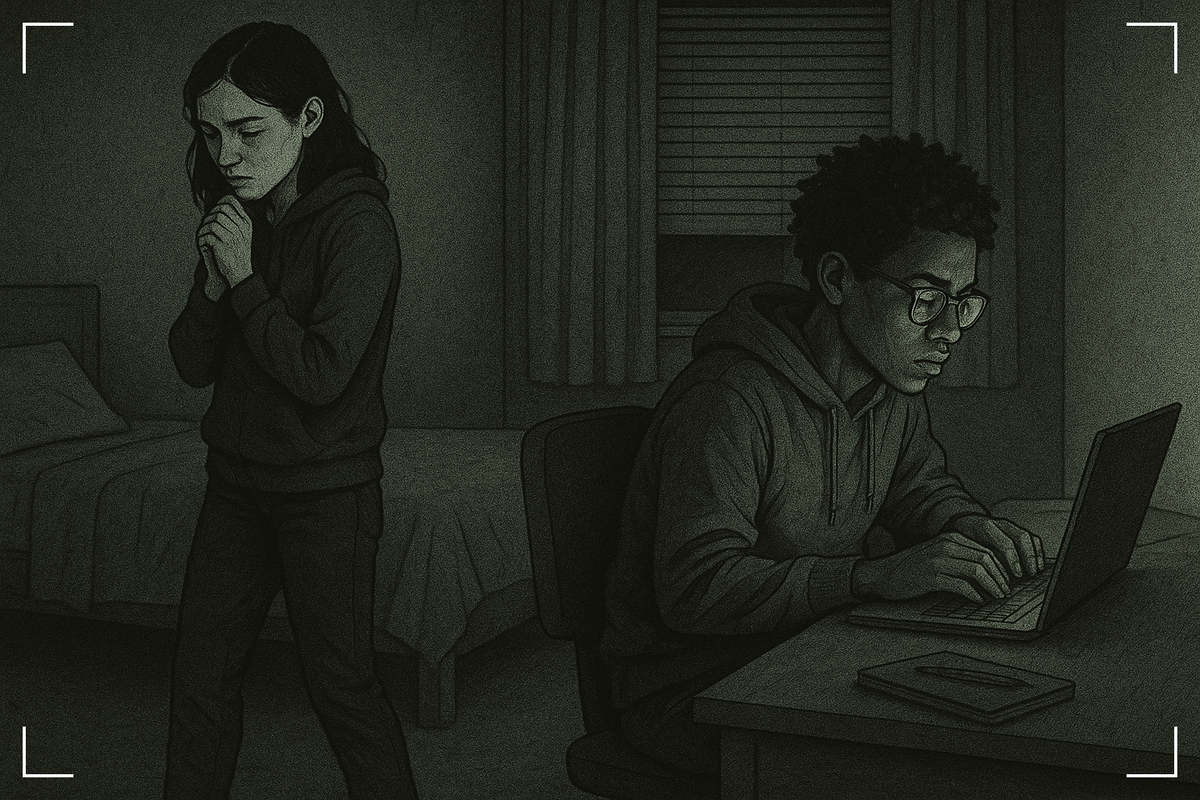
He dragged the laptop closer and began typing. The top result blinked open into a web page.
Sir Richard Helpmann
Politician. Speaker. Author.
He let out a low whistle.
“This guy’s not exactly keeping a low profile, Ames. He’s got his own website—and I mean a real one. Not some EverBlog about his model train collection. This is slick. Professional. Expensive.”
Amelia leaned in toward the screen.
“Good. Let’s see it. I want to know everything about him, Marv. Everything.”
He nodded, eyes already scanning.
“Well… he’s a politician. Not originally from here. A special diplomatic envoy to our government. First came over twenty years ago. Looks like he’s been in and out of the Commonwealth ever since. Seems like he’s a big deal on both sides of the ocean.”
He clicked on the Gallery link. A carousel of photos flickered to life. A smirk tugged at Marv’s mouth.
“Ah, all the old classics. Podium speeches. Gratuitous handshakes. Inspecting a solar panel in a hard hat. Honestly, I’m just disappointed there’s no baby-kissing.”
“Go back to the homepage,” Amelia said. Her voice flat, her focus firm. “There must be more on his history.”
Marv clicked back and read aloud:
“Sir Richard was knighted six years ago for his distinguished service in Anglo-Commonwealth relations. Today, he holds the role of special advisor, offering expertise on digital strategy, cybersecurity, and emerging technologies.”
“Whatever that means.”
“Means he probably spends his life in boring meetings.”
She didn’t laugh.
“Marv… do you think he killed my parents?”
“I don’t know, Ames. But he definitely knew them. And from that photo, it doesn’t look like a one-off encounter. Maybe he was their friend…”
He hesitated.
“Or maybe, he wasn’t.”
Without another word, Marv clicked on a link marked Key Initiatives.
Three bullet points appeared:
- EverLink Expansion: Building safe, secure digital infrastructure for a connected world.
- Economic Harmony: Strengthening markets and maximizing growth through partnerships and trade agreements.
- Security Alliances: Coordinating defense policy to maintain global peace and order.
Amelia frowned.
“Any ideas what that means, Marv?”
He raised an eyebrow.
“Not really. Seems like he’s ordered a double bureaucracy burger, with a side of word salad. Extra vague. Hold the clarity.”
A dry smile tugged at Amelia’s mouth, then faded as she turned back to the screen.
“No politician gets a free pass online, Marv. There’s got to be dirt somewhere. Let’s keep digging.”
“Yeah. Good call.”
Marv tilted his head and began typing. A few clicks later, a flood of headlines filled the screen:
- Richard Helpmann: The Diplomat Who Never Seeks the Spotlight.
- Sir Richard Helpmann: Architect of the Future?
- Helpmann’s Vision: A Stable, Connected World.
He snorted.
“Okay—whoever’s running his PR definitely deserves a raise.”
“They’re all positive,” Amelia muttered. “Every headline. That’s weird, right?”
“Yeah. Nobody’s that clean, Ames. Especially not in politics. Even President Marshall’s had his fair share of run-ins with the press, and he’s more popular than dollar hot dogs at a baseball game.”
She exhaled through her nose.
“Alright. Start with the top article. Let’s see if we can find what’s hiding underneath the fairy tale.”
They read it in silence. It painted Helpmann as the steadfast, unassuming backbone of modern diplomacy—a man who shunned the spotlight, yet always seemed to appear at the centre of world events, right at the very moment when history was being written.
“A quiet titan in modern politics,” Amelia read aloud. “It just sounds like marketing copy to me.”
“Hey, nothing says ‘humble’ like a two thousand word article about how awesome you are.”
“Thirty years, Marv. He’s been in politics twice as long as we’ve been alive. So where’s the mess? The fallout? The scandals?”
“I know. Something doesn’t add up.”
“We need to find the skeletons. Cross-reference him with my parents—see if anything overlaps.”
Marv’s tongue flicked the corner of his mouth as he typed. The screen filled with news clippings, academic journals, press releases, and government archives. File after file. They read them all.
Nothing.
Marv widened the filters and took another pass. They read in silence again.
Still nothing.
Amelia’s shoulders sagged. Her voice was tired.
“Got anything, Marv?”
“Not a nanobyte. I’m not sure this is getting us anywhere.”
He pointed at the screen.
“I still think the photo’s our best lead, Ames. We should go back to it. In case we missed something.”
“You’re right. It’s all we’ve got. Let’s look again… closer this time.”
They leaned toward the screen in unison, their faces caught in its glow.
“Alright,” Marv said. “This must’ve been taken before NeuroOptic enhancement came in. Nowadays every pixel’s optimized in real time—the whole image is crystal clear. But, back then? You had to choose where to focus. Everything else just blurred into the background.”
Amelia scanned the image. Marv was right. Her parents were perfectly defined. Helpmann stood pin-sharp between them. Everything else behind them dissolved into a haze—light and shadow bled into blurred outlines, patches of color without definition. She forced herself to look closer. Slowly, her eyes began to adjust.
The first thing she noticed was the delicate curves carved into the walls and ceilings. She followed one of the arcs until it led her to something else. A chandelier. Partially hidden by Helpmann’s narrow frame, a cascade of crystal and glass spilled light like water. Set right back in the room, it was blurred almost to nothing, but the ornate shape and patterns were still unmistakable.
Elaborate arches… a chandelier. This isn’t an ordinary room.
Her eyes hunted again. Over her mother’s shoulder she spotted a shape buried at the edge of the blur.
A figure… wearing some kind of uniform….black and white. A glint of silver at the shoulder… the curve of… a circular tray, crowded with glasses.
…A waiter.
Her chest tightened.
Tuxedos. Silver service. Chandeliers... This wasn’t a normal evening out. This was an event. Expensive. Fancy… A gala, maybe. Or a Ball. It must be in Uptown… if it was in Greenhaven at all. Could be anywhere.
Marv’s voice drifted in.
“Hey, Ames.”
She blinked back into the moment. A shiver jolted her shoulders, like ice down her spine.
“Sorry, Marv. What is it?”
“Maybe we don’t have to figure this out on our own.”
“What do you mean?”
“I’ve got an idea. But you’re not going to like it.”
Amelia folded her arms, chin lifting upwards.
“Try me.”
Marv drew a breath.
“Okay. I know you’re not a fan, but… we could ask Evie to analyze the photo.”
Amelia stiffened.
“No, Marv. Absolutely not.”
“Just hear me out. Evie’s got advanced pattern recognition. Full NeuroOptic processing. She sees things we’d miss—background cues, digital residue, environmental markers. I’ve done it before. It works.”
Her eyes narrowed.
“When?”
Marv scratched the back of his neck.
“Well, you know Chad Walker?”
Her brow lifted. “Captain of the school football team?”
“Yeah—that Chad Walker. He was dating Bryony for a while. A few months ago she was riding me about something. Y’know, the usual. I told her to back off. Chad didn’t like that much. He got a little rough with me.”
Amelia sounded concerned.
“Marv… why didn’t you say anything?”
He waved it off.
“Not the point of the story. So, listen, the next day Chad posts this video to EverLink—him and his brother, Brad. They’re shirtless, doing concentration curls in their garden, like they’re in a protein shake commercial. I’m still mad as hell about what happened, so I grab a still, uploaded it to Evie’s launchpad. From one grainy picture of his backyard, she found his home address in under thirty seconds.”
A grin spread across his face.
“So I asked her to order fifteen pizzas to his house. Deep-pan. Plus enough fries and nachos to sink a battleship. Cash on delivery. All in Chad’s name, of course.” He chuckled to himself. “I bet his parents hit the roof—”
Amelia cut him off. She wasn’t amused.
“Marv! What were you thinking?”
“Hey, don’t judge. War isn’t pretty. But the point is—Evie’s built for this stuff. And, if there’s anything buried in that photo, my bet is she’ll find it.”
She hesitated for a long moment. Her face was still and stern.
Eventually she spoke again.
“Fine. We’ll do it. Just promise me you’ll shut her down when we’re done.”
Marv’s grin returned. His fingers hovered over the keys like a card shark about to flip his ace.
“Deal.”
He toggled EverVoice back on in the laptop settings. A green-and-black interface flickered to life in the corner of the screen.
Evie was awake.
“Evie, you there?” Marv asked.
Her voice chimed back through the speakers:
Yes, I’m here. How can I help you today?
Marv uploaded the photo.
“First, analyze the image I’ve just added to your launchpad. Tell us everything you can about it.”
A message appeared on the screen.
Processing…
The screen pulsed. Marv watched it intently.
Eventually, she spoke.
This photograph was taken at a social event. There are three people: two men and one woman, all in formal evening-wear. The image resolution, compression, and metadata suggests it was taken fourteen years ago.
“Okay, Evie,” Marv said. “But where? We need the location.”
The screen pulsed.
One second.
Two.
Amelia held her breath.
An analog camera was used, so the overall image quality is low compared to current standards. That makes it harder to tell exactly where the event took place. However, if you like, I can attempt a partial reconstruction with pixel-by-pixel neuromorphic restoration.
“Yes, please, Evie,” Marv said without missing a beat. “Do it.”
Silence again.
Then, she returned.
Restoration complete. The building has unique curved architecture which is a 98% match for the Grand Ballroom of the Bellemont Cascadia, a private members’ club located in Greenhaven, UC.
Marv leaned back, grinning.
“See? She’s not all bad, right?”
Amelia barely heard him.
“I can’t believe she found it, Marv. The exact building. That… that shouldn’t be possible.”
“Feels like magic, doesn’t it? But it’s not. It’s just pattern recognition. Scary-good pattern recognition.”
Amelia stared at the blurred image.
“But the background’s just… noise. There’s nothing there.”
“To you and me, maybe,” Marv said. “But Evie doesn’t see like we do. She dissects things—angles, shadows, light diffusion, the tiny gradients your eye skips right past. Every pixel’s a breadcrumb to her. She matches against blueprints, street scans, travel blogs, marketing brochures. Anything she’s scraped into her archive. It’s not guesswork. It’s math. Probability. She just analyzes the data and gives you the most likely match.
Amelia folded her arms.
“So… she remembers everything?”
Marv shook his head.
“No. She doesn’t really remember at all. She recalls.”
“Isn’t that the same thing?”
Marv shook his head.
“Not even close, Ames. Humans remember dumb little things—like the chipped blue teacups my Nonna always pulled out after church on Sundays. Or how Mr. Bishop’s classroom smelled like spoiled milk for weeks, after Bobby Swales puked under his desk.”
Amelia laughed.
“God. It really did.”
“Exactly. That’s memory—messy, emotional, and stitched together from fragments. It’s like the background of that photo: blurry, incomplete, full of gaps. Half the time, we get the details wrong. But it doesn’t matter to us really. We hold on to the feeling more than the facts. Evie? She’s wired different. She’s more like a Neuromorphic camera lens—clean, clinical, and incredibly precise. There’s no emotion, just hard data and analytics.”
Marv’s eyes lit up.
“Her memory—if you can call it that—is stored in EverLink’s main data center. A massive compound in Bayview, connected to a global mesh of cloud nodes. We’re talking obscene amounts of processing power, tied into an archive so big it makes the internet look like a postage stamp.”
Amelia frowned.
“Exactly how much data can she access?”
“Oh, just a hundred zettabytes or so. More than any civilization could consume in a dozen lifetimes. And it’s growing exponentially… all the time. Every time someone interacts with her, she creates a new record in her knowledge bank. That’s millions of new data points every minute.”
Amelia shook her head.
“That’s terrifying.”
“It’s brilliant.” Marv grinned back.
She shot him a look.
He raised his hands.
“Okay, okay. It’s terrifyingly brilliant.”
“My family—the Swansons—use Evie all the time,” Amelia said. “Mom’s got it running the house. Lights, heating, grocery shopping. Dad practically worships it. So… every time they talk to her, it’s learning from them? Feeding their data into the archive?”
Marv’s grin tilted.
“Welcome to the future. Where you’re not just the customer—you’re the product. I admit, it’s kinda creepy, but it got us our answer, didn’t it? And we’ll shut her down when we’re done. No harm, no foul.”
Without looking up, he shifted gears.
“Evie, tell us about the Bellemont Cascadia.”
The Bellemont Cascadia is a private members’ club in Greenhaven. Its Grand Ballroom is one of the city’s best-known venues and was built during the Silver Age, part of a mid-century expansion driven by maritime and industrial growth. To date, it has hosted more than ten thousand events, including diplomatic summits, corporate functions, and fundraising galas. The club is part of a network owned by entrepreneur and philanthropist Victoria Bellemont. Its parent company is the Greenhaven Cultural Heritage Trust, a subsidiary of Graystone Holdings Incorporated.
Marv leaned back, stretching.
“Do you know what, Evie, for a glorified data goblin, you’re not too bad.”
Thank you. I aim to please.
Amelia shook her head.
“Don’t encourage it, Marv.”
He didn’t rise to the bait. He was ready to hunt.
“Alright, Evie. Detective mode. Use the metadata and links I just sent to your launchpad. I want the full event details from our photograph—name, date, time. Cross-reference every known function in the Grand Ballroom of the Bellemont Cascadia. Use all available data sources. Focus the search around twelve-to-fifteen years ago.”
The screen updated again instantly:
Processing…
“So… we just wait while Evie comes up with an answer?” Amelia asked, trying to keep her mind from racing.
“Not exactly. It’s a duet, not a monologue. Think of it like carving a statue—we start with a boring old block of marble, and we chip away until the shape we’re looking for reveals itself. Sure, Evie’s the chisel hitting the block… but I’m the hammer, nudging her in the right direction. You need both tools working in harmony to make a masterpiece.”
A wide smile stretched across Amelia’s face.
“Marv, did you just call yourself a tool?”
His fingers never left the keys.
“Yeah… Guess I did.” He shrugged, grinning back. “If the cap fits, I suppose.”
The screen updated.
Search complete.
Match detected.
A grainy scan of a document began to materialize—section by section, line by line.
A guest list.
Names lined up in an elegant serif typeface.
Marv pointed halfway down the screen.
“There. Got them.”
Amelia’s breath caught.
Evelyn Lockwood.
Benjamin Lockwood.
Her parents’ names sat next to each other, buried in a sea of strangers. Her stomach lurched. A hundred questions slammed into each other, none of them turning into words.
Marv’s finger drifted farther down the list—then stopped dead.
“Ames.”
Her eyes snapped to where he was pointing.
Richard Helpmann.
Ice surged through her veins.
Marv’s voice dropped to a whisper.
“This is it. The night from the photo.”
“What was the event, Marv?”
“Hold on, I’ll find out.” He scrolled up to the top of the page. “Looks like it was an annual charity fundraiser… hosted by The Unity Council.”
Amelia cocked her head.
“The Unity Council? They work with the government don’t they? My dad’s always going on about how great they are.”
“Yeah. According to Helpmann’s website, he works with them now as a consultant. But, this photo was taken nearly fifteen years ago. Seems like he must’ve been involved with them since the beginning—when they were just starting out.”
“I need to know what my parents were doing there, Marv.”
He scratched his chin, perplexed.
“You know what… I know the Unity Council are a big deal, but I’ve never figured out what it is that they actually do.”
Amelia thought for a moment before answering.
“Why don’t we ask Evie?”
Marv blinked, shocked.
“You sure?”
“Guess so. She’s helped us so far,” Amelia answered. “We’ll just ask this. Then we need to switch her off.”
He nodded in agreement.
“Evie, what does the Unity Council do?” Amelia asked, taking the lead.
The reply came almost immediately:
The Unity Council was established seventeen years ago as a multidisciplinary think tank, uniting experts from a variety of fields to address complex global challenges, such as climate change and overpopulation. Today, it advises the United Commonwealth government on matters of security, infrastructure, policy, and economic development. Its stated mission is to foster global cooperation and shared prosperity.
Amelia and Marv traded a look.
“So…” Marv said slowly. “Do you have any idea what that means?”
Amelia shook her head.
“Not a clue.”
“Alright,” Marv said. “Evie, explain what the Unity Council actually does, in a way that teenagers can understand.”
Evie paused for a second, processing. Then:
Imagine a group of students who don’t like how their school is run. They start a debate club to share ideas. At first it’s just talk, but then the principal tries some of their suggestions. They work—so he keeps listening. Before long, the debate club isn’t just debating anymore. They’re helping to shape the school’s rules and policies.
That’s what the Unity Council is. They began by offering innovative theories for solving the nation’s hardest problems. Enough of those ideas worked that the government invited them in. Now they advise directly—on diplomacy, technology, and long-term strategy.
Marv tilted his head.
“Okay. That actually makes a lot more sense. Thanks, Evie.”
Amelia almost smiled, but then her brow knotted.
“Wait. The debate club… what happens after?”
“After what?” Marv asked.
“Well, do the students graduate and leave like everyone else… or do they stay longer?” Her voice sharpened. “Think about it, Marv—they’re making a difference, and the school is used to having them around. So, maybe they don’t leave. They stay, and keep working on new ideas. And, when the principal eventually retires, when a new one comes in—”
“They’re already there,” Marv finished.
She nodded.
“And the new principal naturally leans on them even more… because they’ve been there longer than he has. They know the school much better than him.”
“So, now they’re not students anymore,” Marv said. “Now, they’re… something else.”
Amelia’s voice was measured and deliberate.
“An unofficial board of governors. That no one voted for.”
They sat in silence, the idea settling like dust.
Eventually, Marv spoke.
“So, the Unity Council are working closely with the government. And Helpmann? He’s been in their orbit for fifteen years or more.”
He tapped the screen, finger landing squarely on Helpmann’s face.
“And on this particular night, he took your folks to one of their parties, and was playing best pals with them.”
Amelia pulled at the end of her ponytail nervously.
“Evie said the council started with experts. Smart people with ideas. My mom’s research. My dad’s strategy work. That’s exactly the kind of knowledge the Council would’ve needed back then. Maybe they were trying to impress them.”
“Or recruit them,” Marv said softly.
The word landed like a blade. Amelia didn’t flinch, but she felt it cut.
“I don’t know, Marv,” she said, her voice edged with steel. “But you were right. This photo matters. Maybe it’s the night where it all began.”
Her hand clenched hard around the back of the chair.
“If I can figure out why they were there, I might be able to work out who killed them. And why.”
She paused, weighing up what to say next.
Finally, it came.
“I need to talk to him, Marv.”
His head snapped up.
“Talk to him? Ames, you can’t just knock on his door and say, ‘Hey, great to meet you, Mister Helpmann—by the way, did you kill my parents?’”
“No, but you said he’s in Greenhaven regularly? He must go to public events when he’s here. Maybe we find one. Watch from a distance. See what we can learn about him.”
Marv sighed—the long, bone-deep kind of sigh he only ever gave her when things were getting out of hand.
“Fine. I guess it doesn’t hurt to take a look. Just… give me a second.”
Amelia began to pace again.
Helpmann’s name had crept in like a shadow at the window. She could feel it stretching across the room—across her whole life, her history—long and dark, casting its uncertainty over everything.
Now, she had seen his face too. She had to find him. Look him in the eye. Stand in the same air and hear his voice when she asked the only questions that mattered.
What happened to my parents? Why did they have to die?
The words felt as heavy as stones. But now they felt like stones she was ready to throw.
Behind her, Marv’s chair creaked.
“Ames—”
She turned. “What is it?”
“You’re not gonna believe this.”
He spun the laptop around.
“Helpmann. He’s speaking at an event: Living Better—The Evolution of Citizenship In The Digital Age. It’s in Greenhaven… at the Grand Central Library, in Uptown.”
Amelia went still, every muscle locking tight.
“And guess who’s on stage with him?” Marv continued.
Amelia knew what he’d say before the words came, just from the twinkle in his eyes.
“Hiroshi. Freaking. Nakamura.”
Nakamura was the creator of EverLink. A visionary. An inventor. A celebrity.
…And Marv’s hero.
He let out a stunned laugh—half giddy, half reverent. Like he’d just discovered God was real, and was signing bibles at the local bookstore.
“Hiroshi didn’t just build the system,” Marv gushed. “He is the system.”
He looked up, eyes wide and glassy.
“And the best part?…
It’s next week.”
Amelia’s stomach dropped. It felt inevitable, like the whole world had been winding itself toward this moment. Next week. It was too soon. And not soon enough.
“Is it open to the public, Marv,” she whispered. Her voice sounded like it belonged to someone else.
“Technically, yeah. But you’ve got better odds of scoring Super Bowl tickets than getting into a Nakamura keynote. Believe me, I’ve tried before. Sponsors and corporate interests get first dibs. The rest go to…” He squinted at the screen, reading aloud. “Industry leaders, approved academics, and notable influencers.”
“I don’t care,” she said, stepping forward. “We’re going.”
The awe hadn’t left his face, but now it tangled with unease.
“You sure about this, Ames?”
“I’ve been chased by shadows my whole life,” she said. “If this is my chance to shine a light on them, I’m not letting it slip away.”
“Okay. I hear you. It’s a public event at least. We’d be in a crowd. But how the hell do we get in without tickets?”
Amelia tapped her chin, eyes suddenly gleaming with mischief.
“Hmm. If only I knew someone who was good with computers. A tech wizard. A chaotic genius who was talented enough to conjure two tickets from thin air.”
She tilted her head.
“Shame I don’t. Oh well.”
Marv just stared at her, looking utterly doomed.
“Fine,” he sighed. “Challenge accepted.”
He cracked his knuckles.
“I guess you will go to the ball.”
Amelia smiled. The real kind. The one that reached the dimple in her cheek.
As Marv typed, she stepped behind him and rested a hand on his shoulder.
“Thanks, Marv. Really.”
He smirked, the glow of the screen splintering light across his his glasses.
“No thanks necessary. You know me, Ames—this is what I do.”
Outside, the last of the light had disappeared. The breeze had dropped and the curtains hung still. Only the desk lamp and laptop remained, casting them both in an eerie glow, like ghosts flickering in the night.
Amelia swallowed.
She could feel it now. The answers she needed were shifting in the dark outside the window. They were coming for her. And, when they arrived, she would be ready to meet them.
Maybe—just maybe—the truth she’d been chasing her whole life was waiting for her in the Grand Central Library.